
For homeowners, buyers, and property managers, water concerns rarely arrive as a neat technical question. They usually begin as something ordinary: a child refusing a glass because it tastes sharp, a brown tint after a plumbing repair, a landlord saying the building has always been fine, or a homeowner wondering whether a new fixture changed what is happening at the tap. In homes, buildings, and properties where potability questions need microbiological context, where properties may include renovated apartments, older branch lines, mixed fixture ages, and high-use kitchens or bathrooms, the practical question is not only whether water comes from a public system. The more useful question is what happens between the building entry point and the glass someone actually drinks from.
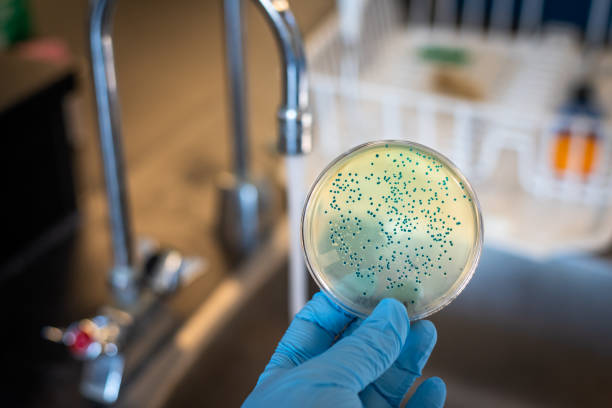
Bacteria testing in water analysis becomes easier to understand when the conversation moves from opinion to measured evidence. A professional laboratory does not simply confirm that something looks clear. It can organize concerns such as total coliform, E. coli, microbiological indicators, potability, sample handling, and chemistry panels into a report that gives the property owner, parent, buyer, or building manager a better foundation for next steps. The purpose is not to create panic. The purpose is to replace vague worry with a clearer set of facts about the specific water being used inside the property.
A qualified laboratory helps make bacteria testing more dependable because microbiological samples require careful timing and handling. That distinction matters because many water issues are local. Two apartments in the same neighborhood can have different fixture materials, different stagnation patterns, different renovation history, and different water-use routines. Even within one home, a bathroom sink may behave differently from a kitchen faucet. Laboratory-supported testing helps connect the sample location to the result, so the numbers are not floating without context.
Metals often receive the most attention in household water conversations, but bacteria testing remains a core part of serious water analysis. A sample can look clear, taste normal, and still require microbiological evaluation depending on the property, source, or concern. Total coliform and E. coli are not decorative add-ons; they can help indicate whether water safety questions extend beyond metals and aesthetics.
Why Bacteria Testing Answers a Different Question
Lead, copper, iron, and arsenic are chemical or metal concerns. Bacteria testing answers a different kind of question. It asks whether microbiological indicators are present in the sample. Total coliform can be used as an indicator group, while E. coli is treated with particular seriousness because of its association with fecal contamination. A metals-only panel cannot answer these microbiological questions.
This distinction matters for homeowners and buyers who ask whether water is potable. Potability is not defined by one number. It may involve bacteria, nitrates, metals, pH, turbidity, and other indicators depending on the property and source. A laboratory-supported plan helps select the right set of tests rather than assuming that one panel covers everything.
That is why many people start by reviewing the laboratory side of the process, including what is explained on the certified laboratories page. Certification, method selection, sample handling, and reporting discipline are not decorative details. They are the difference between a loose impression and a result that is built to be interpreted. For a homeowner or parent, that extra structure can make the final report easier to discuss with a professional, a building representative, or a family member who needs a clear explanation.
Sample Handling Is Critical
Bacteria samples are sensitive to collection and timing. The bottle, collection method, transport conditions, and holding time all matter. A careless sample can create confusion, and a delayed sample may not be acceptable for accurate analysis. This is one of the strongest reasons to use a qualified laboratory process instead of treating bacteria testing casually.
The person collecting the sample should follow instructions closely. The fixture may need to be selected carefully, and contamination from hands, sink surfaces, aerators, or containers should be avoided. Unlike some water complaints where a broad screen may seem tempting, bacteria analysis depends heavily on procedure. The quality of the process affects the value of the result.
Reliable outside references can also help frame the issue without replacing a property-specific sample. For example, EPA Revised Total Coliform Rule information gives families a public-health baseline for understanding why the concern matters. CDC well water testing guidance adds another layer of context for the types of contaminants, methods, or standards that may be relevant. When the issue is specific to a property, however, public information should be paired with actual laboratory testing rather than treated as a substitute for it.
When Bacteria Testing Belongs in the Plan
Bacteria testing may be especially important for private wells, properties with unclear water sources, homes involved in real estate transactions, buildings with recurring potability concerns, or situations where illness, odor, flooding, or plumbing disturbance raises questions. It may also be included as part of a broader water quality baseline. The point is not to test randomly, but to recognize when microbiological indicators are relevant.
A good testing plan should match the question. A family worried about lead may need first-draw or fixture-specific sampling. A buyer who notices staining may need metals and general chemistry. A household concerned about odor or unusual taste may need a broader panel that includes bacteria or potability indicators. The laboratory testing services page is useful because it separates different testing goals instead of treating every water concern as the same problem.
Even in properties served by public water, bacteria testing may be considered when the question is about the building or fixture conditions. A building’s internal plumbing, filters, storage components, or rarely used taps can create property-specific questions. Laboratory analysis helps evaluate the actual sample rather than relying only on general assumptions.
How to Read Bacteria Results
Bacteria results should be read carefully. A detected indicator does not automatically explain the entire cause, and a non-detect result applies to the sampled location and date. The report should be interpreted with sample handling, fixture choice, and property conditions in mind. If the result is unexpected, repeat or additional testing may be considered as part of a more complete evaluation.
Method choice is especially important when the final result may guide a family decision. Metals, microbiological samples, and PFAS analysis are not handled in exactly the same way. A serious testing provider should be able to explain why a particular bottle, holding time, preservation step, or laboratory method is being used. The testing methods page can help homeowners understand why method discipline matters before a sample is ever collected.
For more technical background, CDC E. coli information offers a helpful reference point. The most important lesson is simple: the quality of the result depends on more than the act of collecting water. It also depends on the right method, the right sample container, and an interpretation that respects the limitations of the sample.
Why Bacteria and Chemistry Often Work Together
Bacteria testing is often strongest when paired with other indicators. pH, turbidity, nitrates, and general chemistry can add context to the water profile. Metals can answer separate questions about plumbing or source conditions. Together, the results create a broader view than one test alone. A certified laboratory can help keep these different categories organized.
For buyers and homeowners, that broader view is useful because water decisions are rarely based on one concern. A property may have both old plumbing and a potability question. A family may worry about children and bacteria at the same time. A serious testing plan can address multiple questions without confusing one type of result for another.
Families and property owners across different service areas can also review the locations page to understand the regional focus of the lab-supported testing process. For direct questions, the contact page is usually the most practical next step because a testing plan should be shaped around the property, the fixture locations, and the reason the concern started.
Conclusion
Bacteria testing still matters because it answers questions that metals and chemistry alone cannot. Total coliform, E. coli, and related microbiological indicators require careful sample handling and qualified laboratory analysis. For serious water evaluations, bacteria testing can be an essential part of understanding whether a property’s water profile is truly clear.